

With the latest high-speed digital economy, solid and quick connectivity is the backbone of any enterprise. Whether you own a data center, are building an enterprise network, or are maximizing your IT infrastructure, the right networking hardware is essential. Among all the imperative components, the SFP Module is one of the most sought-after types for fast, flexible, and affordable connectivity. So what exactly is an SFP Module, and how do I choose the right one for my network needs? Let's learn in depth.
Understanding the Basics of an SFP Module
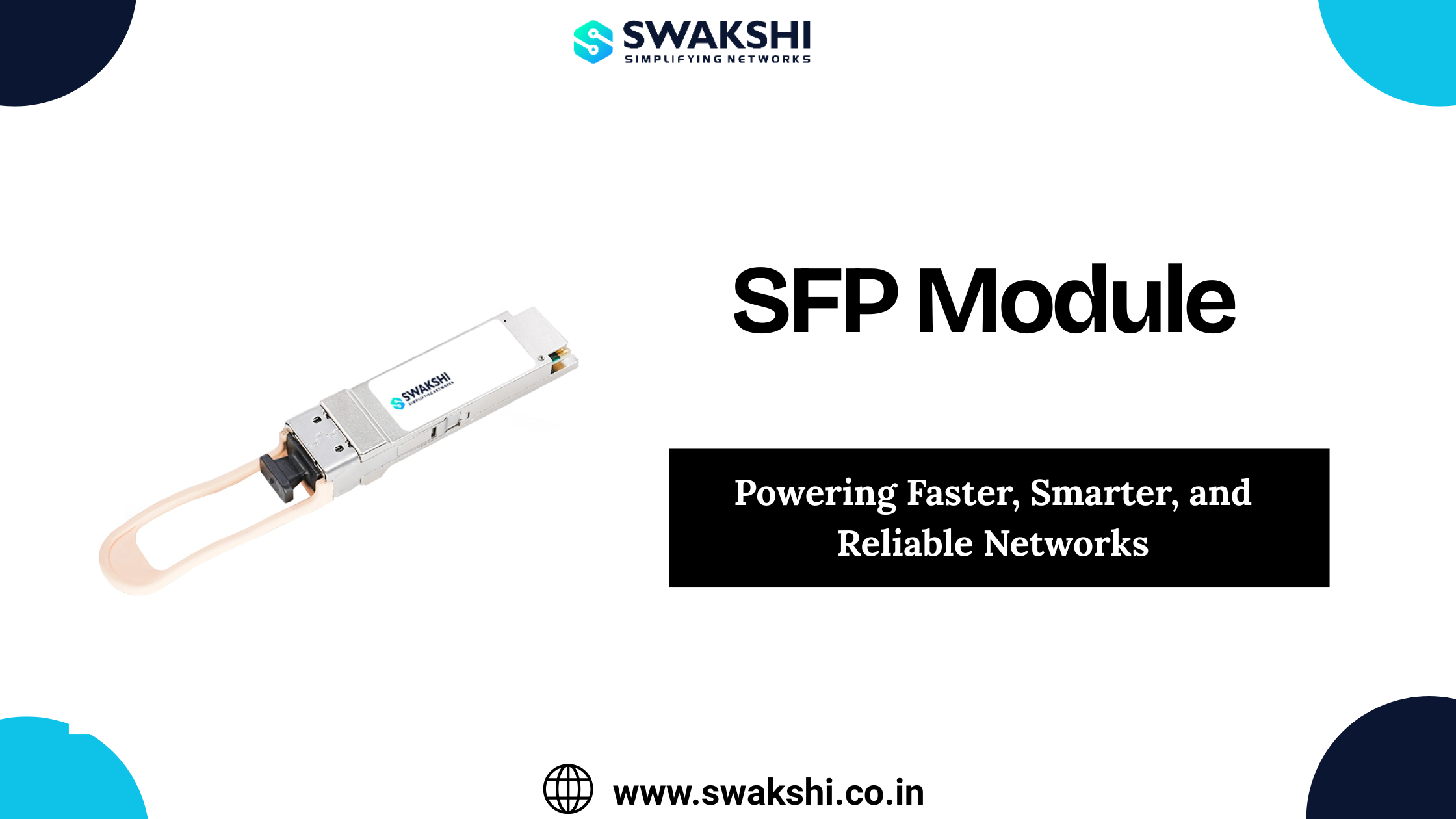
A Small Form-factor Pluggable or SFP Module is a hot-swappable, small transceiver employed on switches', routers', and servers' network devices. It is used primarily to support data transmission between networking devices and communications lines via fiber optic or copper cable.
It is the flexibility that renders an SFP Module attractive. Instead of being stuck to a single cable type or transmission protocol, the modules allow users to choose the appropriate transceiver to fit their respective cable type, speed, and distance. This not only offers design simplification in networks but also cost savings at the time of upgrade or expansion.
Why Companies Depend on SFP Modules
Companies in industries—telecom to cloud computing—are looking increasingly towards SFP Modules Manufacturers because they provide functionality without making companies commit to fixed configurations. They are compatible with multiple protocols such as Ethernet, Fibre Channel, SONET, and SDH. Another important advantage is their scalability. As networks expand, it is easier to upgrade or replace an SFP Module than it would be to replace a switch or router. This is cost-effective and time-saving and keeps your infrastructure future-proof.
Different Types of SFP Modules
When selecting the right SFP Module, one must be aware of the fact that all transceivers are not the same. They are all varying kinds, one for every velocity, distance, and cable type.
Single-Mode SFP: For long-distance transmission, typically up to 10 km or more. It is better to install it on wide-area networks and large campuses.
Multi-Mode SFP: Suitable for shorter distance, generally 550 meters. Suitable to employ in data centers and office spaces where lots of speed in near locality is needed.
Copper SFP: Utilizes RJ45 ports for Ethernet over copper wire. Cost-effective for short-distance connections.
BiDi SFP: Utilizes a single strand of fiber for two-way communication in order to conserve fibers with efficiency maintained.
With this understanding of the various types, businesses can choose the most suitable module to install in their network.
Speed and Compatibility Issues
Another criterion to choose an SFP Module based on is speed. Base SFPs are equipped with up to 1 Gbps speeds, advanced SFPs such as SFP+ are equipped with 10 Gbps, and SFP28 is equipped with up to 25 Gbps. For even quicker setups, modules such as QSFP are used.
Compatibility is also important. Not every SFP Module will work in every switch or router. While most are designed to follow the MSA (Multi-Source Agreement) standard, some companies have proprietary restrictions. It's always a safe bet to check whether the module is compatible with your specific gear before making a purchase.
How to Choose the Right SFP Module for Your Network
In selecting the proper SFP Module for your network, a couple of things should guide your choice:
Distance Needs: On long haul connections, single-mode SFPs would be more appropriate, but on short distances, multimode will do.
Speed Needs: Look at your existing bandwidth needs and project future growth. Spending money to upgrade to more speed modules today may pay off tomorrow.
Cable Type: Make sure your installation accommodates copper or fiber optic cable. Your SFP Module choice should then be.
Compatibility: Always make sure that the module is compatible with the equipment within your network. Incompatible modules can lead to performance problems or no performance at all.
Budget and Reliability: Budget is important but not reliability. Spending on original and quality SFP Modules translates to long-term stability.
Here, quality decision-making ensures your network runs best, securely, and with fewer shutdowns.
The Role of Quality Suppliers When Choosing an SFP
The correct supplier is as crucial as procuring the correct hardware. The correct partner makes you buy original, genuine SFP Modules Supplier and not low-quality, inferior copies that might compromise your entire network. At swakshi.co.in, business enterprises are given robust, industrial-strength solutions that fulfill technical and cost requirements. It is simple and easy to choose and put in place SFP Modules.
Future of SFP Modules in Networking
With technology developing further, the role of SFP Modules will grow even more important. With the advent of 5G, cloud, and edge data centers, there is ever-growing demand for high-speed and scalable connectivity. Such requirements are already addressed in existing PON SFP standards, with flexible solutions ranging from 1 Gbps to 100 Gbps and beyond.
This flexibility is to the point that those organizations who put most resources into SFP Modules today have a good chance of being able to meet the requirements of tomorrow.
Conclusion: Empowering Your Network with the Optimal SFP Module
SFP Module is not a transceiver alone—it is the support of an adaptable and future-proofed network. The understanding of different types, compatibility issues, and speed demands makes it easy for businesses to make correct decisions in the favor of long-term development.
For those organizations that desire to provide perfect performance, the correct partner is the solution. That's why swakshi.co.in remains the sole option for those organizations which expect the best networking solutions.
Elevate your network performance to the next level with a perfect SFP Module. Contact us now and begin taking the initial step towards a strong, faster, and intelligent infrastructure.